
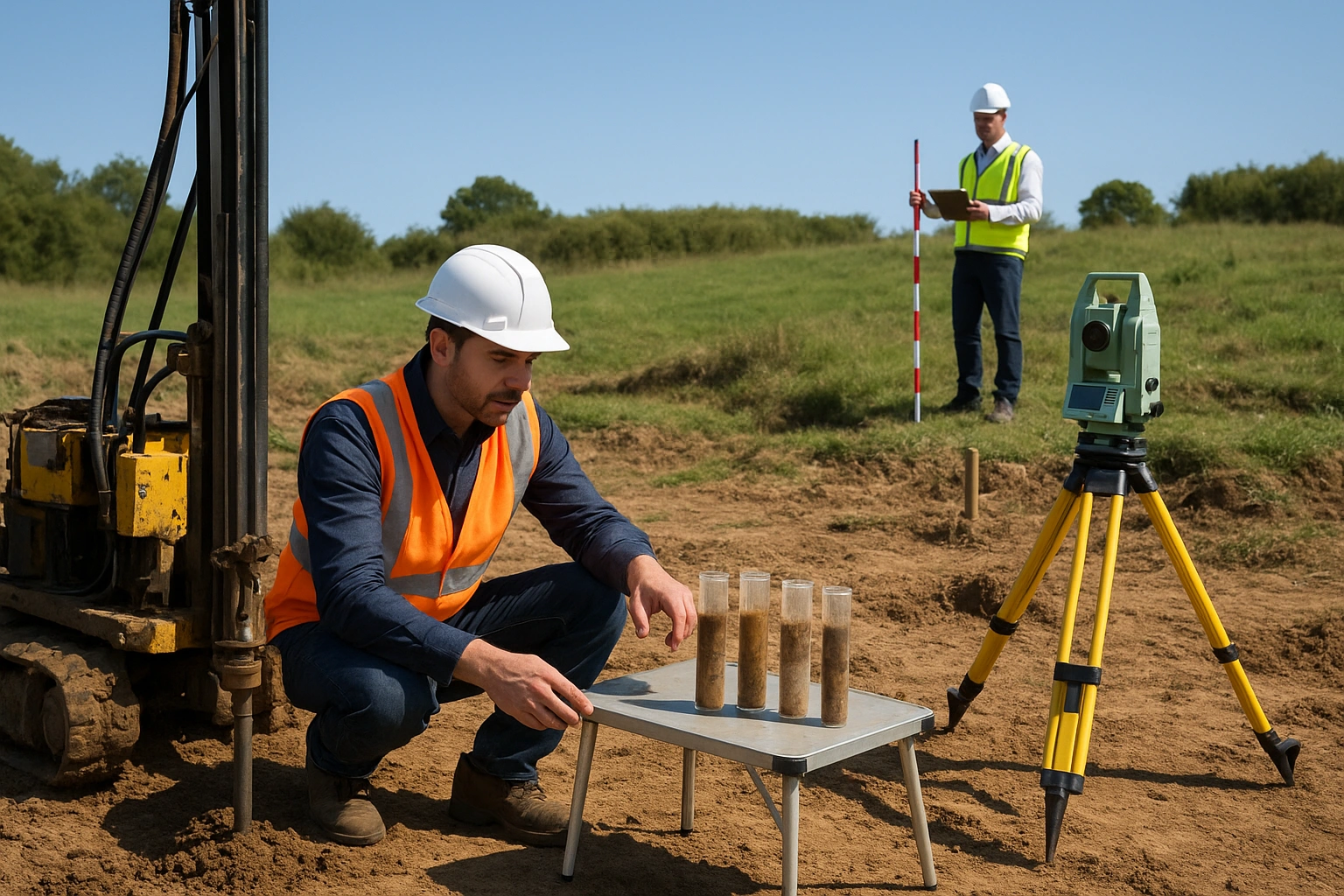
Working on a new building project, whether it’s your first home or a dream renovation, often involves understanding the specifics of your land. Two crucial steps in this process are soil testing and site surveying, both of which contribute vital information to ensure a smooth and successful build.
What is a Soil Test and Why is it Important?
A soil test is like an initial health check for your land. It involves analysing soil samples to understand their characteristics, such as texture, stability, and nutrient content. Geotechnical engineers conduct these tests by collecting samples from various locations and depths across the block.
The results of a soil test are incredibly valuable for builders and structural engineers. They help determine:
- Bearing Capacity: This tells us how much weight the soil can support, which is critical for designing appropriate foundations. Unstable land might require deeper footings, impacting costs.
- Reactivity: Understanding if the soil is prone to expanding or contracting due to moisture changes can prevent future structural issues.
- Fill or Scrape Recommendations: Soil tests can identify if the land needs to be levelled or if existing fill material is suitable for building upon.
Getting a comprehensive soil test for the entire block, rather than just one small section, is essential as soil conditions can vary significantly. This proactive step helps in obtaining more accurate quotes from contractors and builders and can alert you to potential problems before you invest further.
The Role of a Site Survey
While soil tests focus on the ground beneath, a site survey provides a detailed picture of the land’s surface and boundaries. This includes information crucial for design and construction planning, such as:
- Slope of the Block: Building on a sloping site can incur additional costs if not properly assessed beforehand. A survey accurately maps the land’s contours.
- Wind Rating: This data can inform structural requirements, especially in areas prone to high winds.
- Existing Features: Identifying retaining walls, gas connections, power lines, sewerage, and drainage systems is vital for safe and efficient building.
Connecting Soil Tests and Site Surveys for a Better Build
Both soil testing and site surveying are foundational steps that work hand-in-hand. An environmental consultant like Earthlynx can provide the critical soil composition and contamination data, highlighting potential environmental factors that need consideration.
Following these essential investigations, a registered land surveyor can then map the precise boundaries, topography, and existing features of your property. For example, a detail and contour survey provides the accurate site data that builders and architects need for design and council applications. This type of survey is often the very first step a surveyor takes to understand a block of land thoroughly.
By understanding both what’s in the soil and the shape of the land, you set a solid foundation for a successful building project, saving time, money, and stress down the line. Engaging experienced professionals for both environmental assessments and land surveying services ensures all aspects of your site are well understood before construction begins.